
Reading Time: 19 minute(s)
Discover the convenience of a large inflatable dome tent designed for outdoor events and lawn parties, offering quick setup and reliable shelter in minutes. Ideal for markets, backyard gatherings, seating areas, and light rain protection, this portable shelter combines durability with easy transport so hosts can focus on guest experience instead of complicated assembly. The dome shape provides generous interior space and stable coverage, while modern materials resist wind and water for peace of mind during unpredictable weather. Whether creating a focal point for a vendor stall, a comfortable lounge for party attendees, or a shaded dining area, this inflatable option simplifies event logistics without sacrificing style. Lightweight yet sturdy, it packs down for compact storage and moves effortlessly between locations. For organizers seeking an efficient, aesthetics-friendly canopy solution, the inflatable dome offers an excellent balance of practicality, protection, and visual appeal for a wide range of outdoor activities.
Section Overview
- Quick-setup benefits and step-by-step setup tips for a large inflatable dome tent for backyard parties with quick setup
- Step-by-step quick-setup guide for a large inflatable dome tent: site selection, inflation sequence, anchoring methods, and rapid breakdown
- Essential maintenance and care tips for long-lasting performance — large air-inflated party tent maintenance and cleaning best practices
- Efficient layout and event planning inside the dome: seating arrangements, display zones, lighting, and airflow considerations
- Weather considerations and protective measures: sun shading, light rain protection, and secure anchoring for changing conditions
- Design features and materials that make a portable inflatable event dome shelter for outdoor markets and fairs sturdy, weather-resistant, and comfortable
- High-performance inflatable dome fabric and tensile strength considerations for durability and repeated use
- Integrated wind load anchoring systems and secure attachment points for safe setup in open lawns and markets
- UV and water-resistant coatings plus seam treatments to protect against sun exposure and light rain
- Ventilation, thermal comfort, and modular access options to keep the sheltered space comfortable during events
- Practical layout ideas: seating, vendor displays, lighting, and ventilation strategies inside the dome
- Zoning the interior: dome event floorplan optimization for seating clusters, activity space, and clear walkways
- Vendor booth configuration dome: arranging tables, display heights, and customer flow for markets and pop-up stalls
- Ambient lighting solutions geodesic dome: layered lighting plans, power-safe options, and fixture placement to create atmosphere
- Airflow and thermal management dome: ventilation points, portable fans, shade orientation, and moisture control for comfort
- Transport, storage, and maintenance best practices to keep your inflatable dome ready for repeated use
- Step-by-step folding and packing techniques for compact transport and prolonged fabric life (folding and packing techniques)
- Cleaning routines and inflatable dome cleaning protocols to remove stains, salt, and mildew before storage
- Preventative repair checks and inspection schedules: seams, valves, and patching best practices (preventative repair and inspection schedules)
- Climate-controlled storage solutions and tips for seasonal rotation, pest prevention, and moisture control
- In a Nutshell
Quick-setup benefits and step-by-step setup tips for a large inflatable dome tent for backyard parties with quick setup
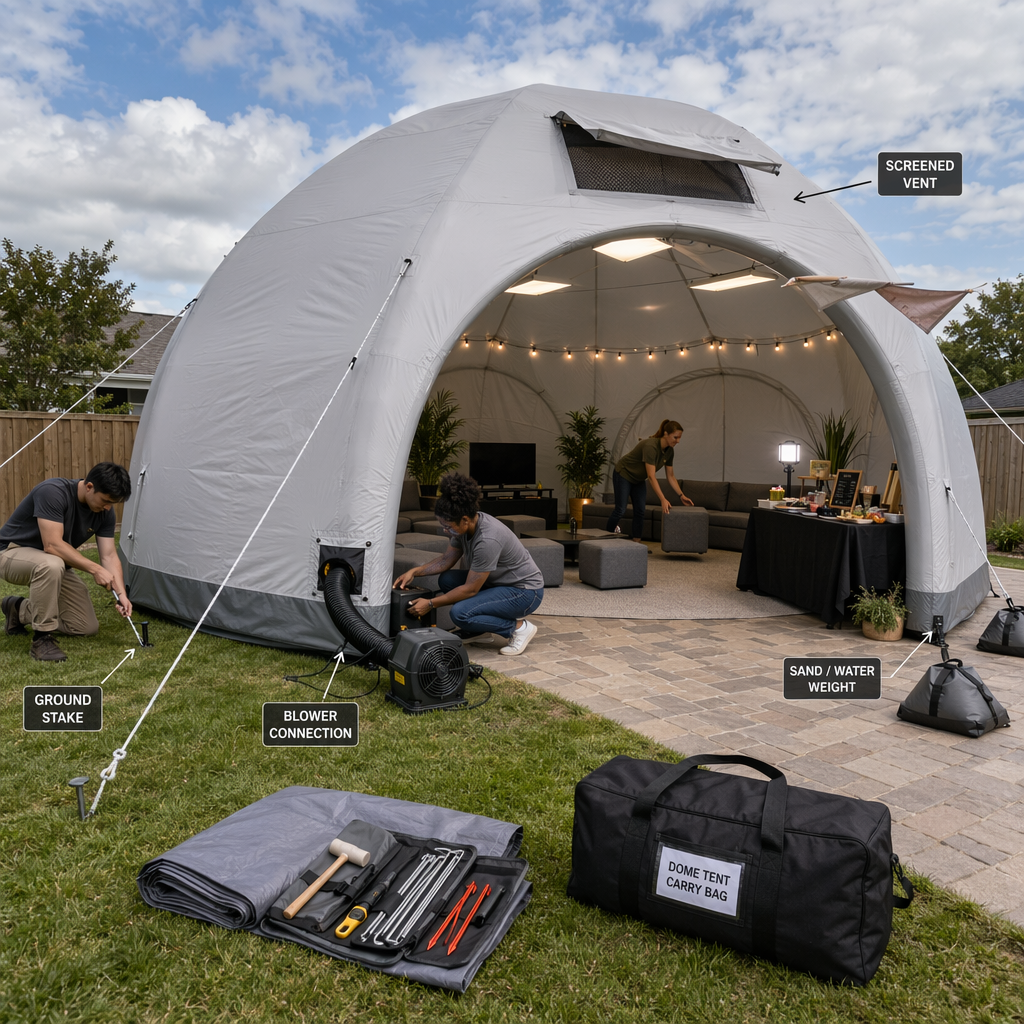
Step-by-step quick-setup guide for a large inflatable dome tent: site selection, inflation sequence, anchoring methods, and rapid breakdown
Choose a level, debris-free site and sketch traffic flow before unpacking. Begin by unrolling the inflatable dome, locate the intake valve, and connect a compact blower; inflation often takes minutes and produces the dome skeleton. Once formed, walk the perimeter and attach supplied tethers to secure ground anchors, sandbags, or water weights depending on substrate. Use stakes on soil and weighted anchors on hard surfaces. Arrange interior furnishings while fine-tuning air pressure to avoid overinflation. For rapid breakdown, remove anchors, deflate gradually to expel trapped air, fold methodically, and stow in its carrying bag. The central utility is quick setup.
Essential maintenance and care tips for long-lasting performance — large air-inflated party tent maintenance and cleaning best practices
Setting up a large inflatable dome tent transforms a backyard in minutes, offering a defined sheltered area for seating, displays, or playful activities. Begin by choosing a level surface clear of sharp detritus and anchor points; this mitigates abrasion and improves stability. Unpack the canopy, unfurl the base, and connect the electric or manual blower to the inflation port — most models reach structural firmness in a few minutes. Secure the dome with guy lines, stakes, or sandbags, paying attention to tension to avoid creasing the fabric. Arrange interior furnishings after partial inflation so items can be adjusted as the shell reaches full pressure. Quick-setup benefits include rapid weather shelter, reduced labor overhead, and the capacity to repurpose the space for diverse functions without cumbersome framework.
Maintenance keeps the structure pristine and functional. After use, deflate partially to expel trapped moisture, brush off particulate matter, and treat seams with a compatible sealant if minor wear appears. For cleaning, use a mild, pH-neutral detergent and soft-bristled brush; rinse thoroughly and allow complete air drying to prevent mildew. Store in a breathable bag away from UV-intensive exposure and rodents. Periodic inspections of valves, zippers, and attachment webbing extend longevity and ensure reliable performance.
Efficient layout and event planning inside the dome: seating arrangements, display zones, lighting, and airflow considerations
Quick inflation delivers immediate utility, turning a backyard into a purposeful sheltered nook with minimal fuss. The inflatable dome excels in rapid deployment: unroll, attach a blower, and watch the structure take shape in minutes, making it ideal for impromptu gatherings or tightly scheduled events. Prioritize a central seating core for conviviality, then define peripheral display zones for food, merchandise, or activity stations to maintain flow and sightlines. Use modular seating—benches and poufs—to reconfigure density without dismantling the layout.
Consider layered lighting: overhead diffused LED arrays for ambience, task lamps for serving areas, and accent strips to demarcate aisles. Ventilation is crucial; incorporate screened vents and orient the dome to exploit prevailing breezes while shielding from direct sun. Anchor points and discreet ballast keep the dome stable during light rain or gusts. The main takeaway is the inflatable dome combines portability, rapid setup, and a defined spatial envelope that simplifies planning and elevates outdoor gatherings with pragmatic elegance.
Weather considerations and protective measures: sun shading, light rain protection, and secure anchoring for changing conditions
A large inflatable dome tent transforms a backyard into an organized gathering hub in minutes, with inflation systems that minimize fuss and tools. Rapid assembly lets hosts define seating, display zones, or activity spaces merely by staking and powering an air blower; breakdown is equally swift, folding into a compact carry case for transport. The design balances portability with robust sheltering: the curved canopy sheds light rain and casts broad sun shading while maintaining airflow to prevent canopy stasis during warm days. For fickle weather, combine low-profile anchoring, weighted ballast, and adjustable guy lines to secure the dome against gusts without rigging complexity. Consider breathable flooring or vent panels to modulate microclimates inside, and apply seam treatments or temporary tarps under heavy showers. Small adaptations—like anti-flap straps and UV-resistant coatings—extend service life and comfort. These pragmatic measures preserve the tent’s convenience while ensuring a reliable, sheltered venue for parties, markets, and casual outdoor use.
According to the Tent Rental Supply Association, proper site selection, correct anchoring methods for the substrate, and regular inspection of seams and inflation systems are key to safe, rapid deployment and long-term performance of air-inflated event structures
For hosts seeking an evidence-based primer on structural behavior and safety principles that apply to inflatable domes, consult the inflatable architecture overview on Wikipedia which details pressure-stabilized structures, anchoring dynamics, and material considerations https://en.wikipedia.org/wiki/Air-supported_structure — integrating those insights with practical site reconnaissance, pre-tension anchoring, and periodic seam assays will markedly enhance serviceability and occupant safety.
Design features and materials that make a portable inflatable event dome shelter for outdoor markets and fairs sturdy, weather-resistant, and comfortable
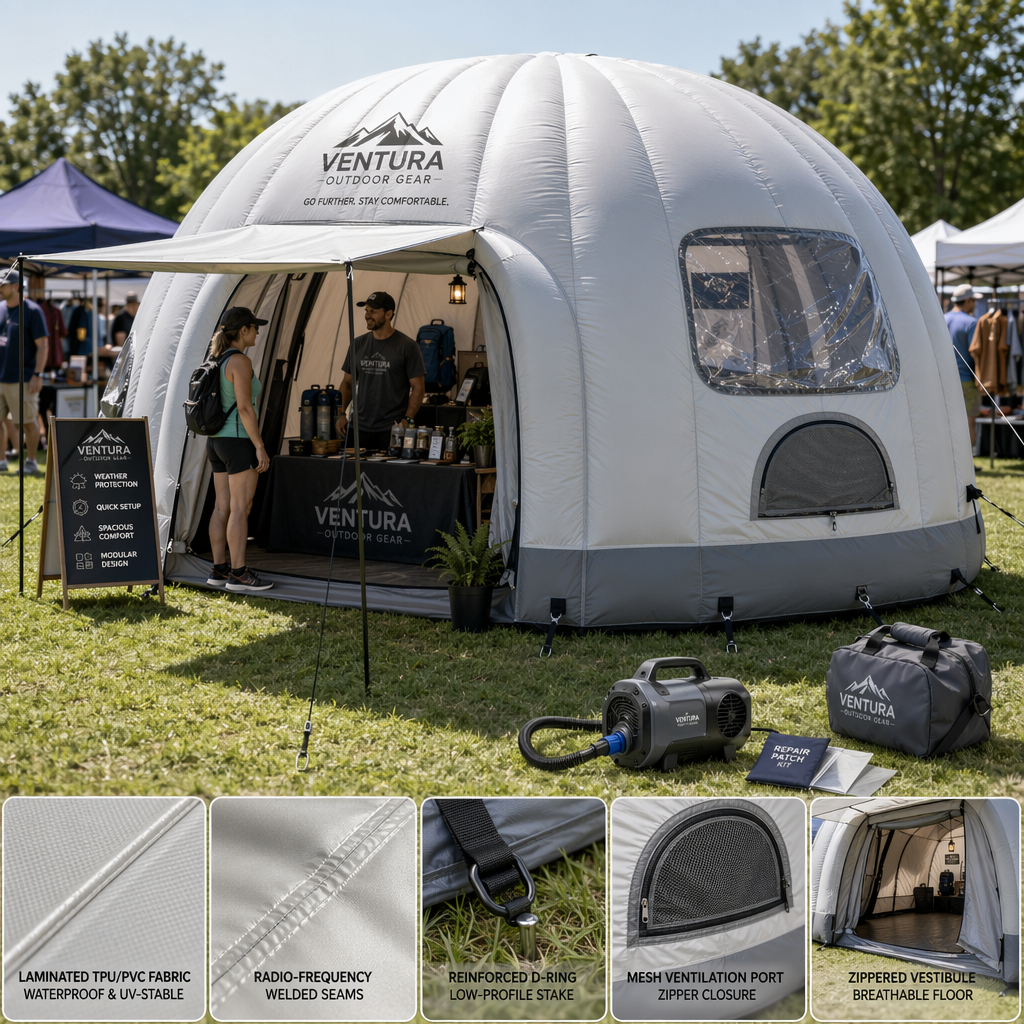
High-performance inflatable dome fabric and tensile strength considerations for durability and repeated use
Engineered for frequent setup and teardown, modern inflatable domes use laminated PVC or TPU-coated textiles that deliver tear resistance and UV stabilization while remaining lightweight. Internal baffle architectures and radial seam reinforcement distribute tensile loads, preventing stress concentraions and enhancing structural integrity under wind gusts. Weatherproof seals and welded seams repel light rain; optional storm anchoring kits add surge resistance on exposed sites. Ventilation ports and mesh panels balance airflow and thermal comfort, reducing condensation during extended occupancy. Quick-connect valves and high-flow inflators enable rapid deployment, and packable design with padded carry cases simplifies transport for pop-up markets and backyard activations.
inflatable dome
Integrated wind load anchoring systems and secure attachment points for safe setup in open lawns and markets
Robust engineering and thoughtful material selection underpin a portable inflatable dome that performs reliably in variable outdoor conditions. The envelope typically uses multilayered TPU-coated polyester or high-tenacity ripstop fabric, delivering tensile strength, abrasion resistance and a measured degree of UV attenuation to keep interiors cooler. Seams are radio-frequency welded or thermally bonded to prevent seepage and extend fatigue life, while clear PVC windows or mesh panels balance translucency with ventilation. Internal baffling and compartmentalized air chambers provide redundancy so a single puncture does not compromise the whole structure.
Integrated ground-attachment systems are crucial for use on open lawns and busy markets: reinforced D-ring arrays, heavy-duty webbing straps and low-profile stake points distribute wind loads across the base. When stakes are impractical, ballast loops accept water or sand weights for anchoring without soil penetration. Tensioning points are labeled and positioned to create predictable load paths that pair with quick-release buckles for rapid setup and secure takedown.
Comfort features include breathable floor linings, zippered vents for stack ventilation, and optional removable awnings for sun control. The overall result is a portable shelter whose durability, modular anchoring and user-centric details make it both weather-resistant and eminently comfortable for events, displays and casual gatherings.
UV and water-resistant coatings plus seam treatments to protect against sun exposure and light rain
Robust construction relies on layered fabrics and reinforced junctions to deliver a stable, comfortable environment for outdoor gatherings. A high-tenacity polyester or ripstop nylon cover with polyurethane or acrylic coatings resists UV degradation and sheds light rain, while taped and thermally welded seams prevent seepage. Strategic baffling and internal air chambers distribute pressure uniformly, reducing stress on anchor points. Ventilated eaves and mesh panels allow convective airflow, limiting condensation and preserving thermal comfort. Lightweight aluminum or composite stake systems secure the dome without cumbersome hardware, making inflation and takedown rapid and tool-free. The key performance attribute is weather-resistant.
Ventilation, thermal comfort, and modular access options to keep the sheltered space comfortable during events
Inflatable event domes use engineered fabrics such as TPU-coated nylon or reinforced PVC to balance tensile strength with lightweight portability, giving the structure resilience against abrasion and incidental impacts. Internal baffle systems and multi-chamber air bladders distribute pressure evenly, so one compromised zone won’t precipitate total collapse. Seams are radio-frequency welded or heat-sealed to ensure watertight junctions and reduce capillary wicking during light rain. Anchoring is achieved through D-ring arrays, integrated ballast pockets, and low-profile stake points that enable secure fixing on turf, gravel, or decking without exotic tools.
Ventilation is addressed with strategically placed mesh vents, adjustable louvers, and optional roof vents that promote stack ventilation and mitigate convective overheating. Reflective exterior coatings and aluminized inner liners attenuate radiant heat gain while breathable panels allow evaporative cooling for sustained thermal comfort. Modular access is provided via zippered vestibules, roll-up doors, and snap-in canopy panels that permit rapid reconfiguration for vendor booths, stage entries, or seating zones.
Design considerations include UV-stable pigments to slow photodegradation, quick-release inflation valves for expedited teardown, and modular repair patches for field remediation. Altogether, these features combine to create a portable inflatable dome that is sturdy, weather-aware, and comfortable for diverse outdoor gatherings.
Practical layout ideas: seating, vendor displays, lighting, and ventilation strategies inside the dome
Zoning the interior: dome event floorplan optimization for seating clusters, activity space, and clear walkways
Start by establishing functional zones: a central convivial seating cluster for conversation, peripheral vendor displays, and a clear circulation corridor that frames activities. Use modular furniture to create intimate pockets and leave a luminous core for performance or demonstrations. For vendor displays, adopt tiered risers and vertical hangings to maximize visibility without encroaching on walkways. Lighting should be layered: soft overhead diffusers to mimic ambient daylight, task lamps at stalls, and low-level uplighting to define borders and enhance ambience. Integrate battery-powered LED strips along ribs to accentuate the dome silhouette.
Ventilation strategies are vital—deploy low-profile oscillating fans near entry points and use screened vents at the dome apex to promote stack ventilation. Locate cooking or heat-generating stations downwind and away from seating. Flooring mats or interlocking tiles delineate zones and improve footing on grass. Keep pathways at least 90 cm wide for accessibility and rapid egress. The result is a sheltered, ergonomic environment optimized for comfort and efficient flow.
Vendor booth configuration dome: arranging tables, display heights, and customer flow for markets and pop-up stalls
Plan seating to create varied zones: a central communal cluster of benches for conversations, perimeter bistro tables for quieter groups, and a few poufs or ottomans for flexible lounging. Stagger table heights to craft visual interest and ease browsing—use tall counters for featured wares and low risers for tactile goods. Ensure a smooth customer pathway by angling vendor tables to form a subtle chevron flow, guiding visitors clockwise without congestion. Integrate diffuse, low-heat lighting such as LED string arrays and clip-on task lamps to maintain ambiance while protecting merchandise. Prioritize cross-ventilation by keeping opposing flaps or roll-up panels ajar and placing small, battery-powered fans near entry points to mitigate stuffiness. Anchor signage at eye level and reserve corner pockets for storage and backstock to preserve the salesfront. For markets and pop-ups, this configuration optimizes sightlines, promotes impulse purchases, and delivers a sheltered, breathable experience tailored to temporary outdoor commerce.
inflatable dome tent
Ambient lighting solutions geodesic dome: layered lighting plans, power-safe options, and fixture placement to create atmosphere
For seating, arrange modular benches and swivel stools around a central focal zone to encourage mingling and maintain clear egress paths; elevated platforms or risers can delineate performance or VIP areas. Vendor displays work best on radial layouts—curved tables hugging the dome perimeter maximize flow and sightlines. Prioritize cross-ventilation with adjustable mesh vents and low-profile oscillating fans to mitigate condensation and thermal stratification. For lighting, layer warm uplighting, task lamps at vendor counters, and dimmable pendant clusters over seating to sculpt ambiance.
Use battery-powered, low-voltage fixtures and concealed cable channels to keep the space safe and uncluttered. The key element is dome.
Airflow and thermal management dome: ventilation points, portable fans, shade orientation, and moisture control for comfort
Arrange concentric seating to maximize sightlines and create clear aisles for vendors, combining folding chairs with low lounges for diverse comfort. Use modular display tables and staggered pedestals to avoid visual clutter while preserving circulation. Integrate battery-powered lanterns and string lights hung from anchor points for layered illumination, and add task lamps for product focus. For airflow and thermal comfort, place vented roof panels near the apex and deploy zippered side vents to encourage stack effect; a portable fan at floor level can promote crossflow. Orient shaded entries away from late-afternoon sun and use moisture-absorbing mats to curb dampness after light rain.
Transport, storage, and maintenance best practices to keep your inflatable dome ready for repeated use
Step-by-step folding and packing techniques for compact transport and prolonged fabric life (folding and packing techniques)
Proper transport, storage, and maintenance prolong the life of an inflatable dome and ensure readiness for repeated use. Begin by thoroughly drying the structure after each event to prevent micro-mold and polymer degradation; leave valves open in a ventilated area until completely moisture-free. For compact transport, deflate slowly and methodically, guiding air towards one or two escape points to avoid creasing. Fold in panels with a concertina technique, layering fabric evenly to reduce stress on seams and coating layers. Use a breathable storage bag or canvas wrap rather than impermeable plastic to allow residual moisture to escape and avoid condensation.
Regular inspection is essential: check welds, seam tape, and the inflation tube for delamination or pinholes, treating small abrasions with recommended patch kits and flexible adhesive. When loading into a vehicle, cushion corners and avoid sharp objects; distribute weight evenly to prevent punctures. Clean with mild, pH-neutral detergents and soft brushes; abrasive cleaners or petroleum-based solvents will degrade the membrane. For prolonged deployment, use ground sheets and tie-downs to minimize abrasion and flapping in gusts. The most important keyword for operational longevity is inflatable dome, which encapsulates the structure, care needs, and handling considerations necessary to keep the asset serviceable across many events.
Cleaning routines and inflatable dome cleaning protocols to remove stains, salt, and mildew before storage
Transporting and storing an inflatable dome demands deliberate technique to preserve its integrity and readiness. When packing, ensure the fabric is completely dry and free of grit; moisture trapped in folds accelerates microbial growth and delamination. Roll the dome loosely rather than folding sharply to avoid crease stress and use breathable storage sacks to prevent condensation. For transit, stow the deflated dome on a padded surface and secure it to prevent abrasion from movement; consider a dedicated duffel with internal straps for large units.
Routine maintenance begins with targeted cleaning protocols: rinse off surface detritus, then use a mild, pH-neutral detergent with a soft bristle brush for stains, salt, or biological films. For stubborn mildew, apply a diluted hydrogen peroxide solution sparingly and rinse thoroughly. Avoid solvent-based cleaners that degrade coatings. Drying is paramount—air until utterly moisture-free. Inspect seams, valves, and anchor points for fatigue and perform minor repairs promptly using manufacturer-compatible patching materials. The key term to remember for longevity is dry storage.
Preventative repair checks and inspection schedules: seams, valves, and patching best practices (preventative repair and inspection schedules)
Routine transport, compact folding, and meticulous cleaning prolong service life for a portable dome. Before packing, perform tactile seam scrutiny, inspect inflation valves for microleaks, and confirm zipper integrity. Establish a fortnightly inspection schedule during active season and a monthly review off-season. Carry a repair kit with adhesive patches, reinforcing tape, and a valve spanner for atelier-grade fixes on the spot. When storing, ensure full dryness and use a breathable storage sack to prevent mildew. During transit, cushion the dome against abrasion and UV exposure with a protective sleeve. Quick, methodical checks avert escalation and keep the shelter event-ready.
Climate-controlled storage solutions and tips for seasonal rotation, pest prevention, and moisture control
Store the inflatable dome in a climate-stable environment to prevent fabric delamination and mildew; aim for cool, ventilated storage with humidity below 50%. Before packing, ensure the dome is completely dry and free of organic debris to reduce pest attraction and microbial growth. Use breathable storage sacks or rigid containers with desiccant packs for moisture control, rotating inventory seasonally to inspect seals, valves, and fabric integrity. During transport, fasten the packed dome to prevent abrasion and keep it away from sharp objects. Routine inspections and occasional UV-protective treatment prolong lifespan and maintain the inflatable dome readiness for repeated use.
In a Nutshell
Practical guidance for large inflatable dome tents centers on fast, reliable setup, weather-aware anchoring, and routine care to maximize lifespan and event performance. Choose a level, debris-free site, unroll the dome, attach a blower and secure tethers to stakes or ballast for rapid inflation and stability. Plan an efficient interior layout with a central seating core, peripheral vendor zones, layered lighting, and ventilation paths to maintain comfort and circulation. Use UV and water-resistant fabrics, welded seams, internal baffling, and clear attachment points to withstand light rain and wind while enabling quick breakdown. Maintenance routines include thorough drying, pH-neutral cleaning, seam inspections, and field patching for minor damage. Fold and pack methodically in breathable storage with desiccants, perform regular valve and seam checks, and store climate-controlled to prevent mildew and delamination. Combined, these steps deliver a portable, weather-resistant inflatable dome that is comfortable, safe, and ready for repeated backyard parties, markets, or pop-up events.